 Purity ≥ 99%
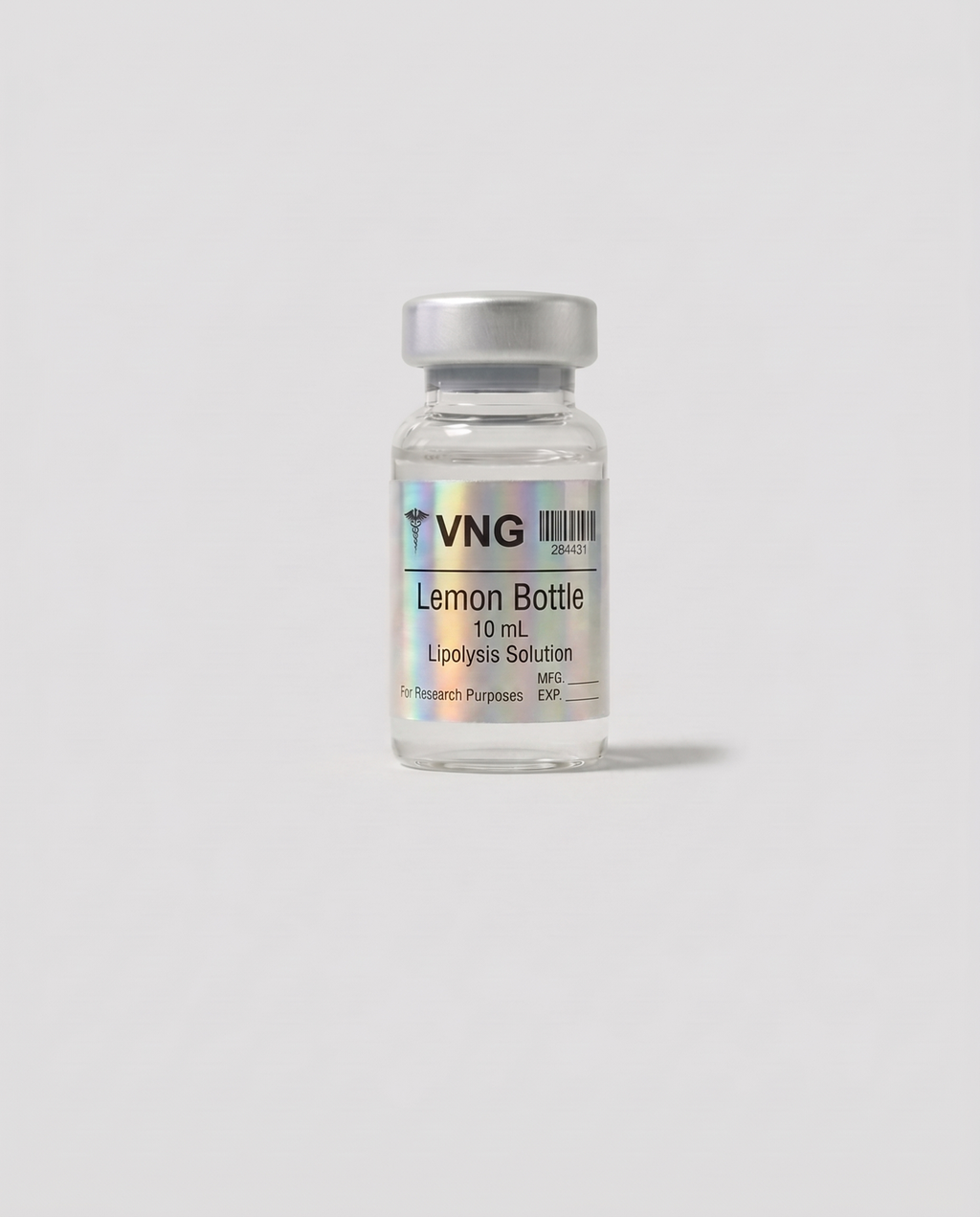
Lemon Bottle
Lipolytic solution blendAnalytical-grade lipolytic research solution combining phosphatidylcholine, bromelain and riboflavin, supplied as a ready-to-use 10 mL solution for in-vitro laboratory research use only.
Cutoff 3:00 PM EDT your time.
Est. 2-5 days
Free shipment protection
Overnight shipping available
Lipolytic solution blend
Lemon Bottle
Analytical-grade lipolytic research solution combining phosphatidylcholine, bromelain and riboflavin, supplied as a ready-to-use 10 mL solution for in-vitro laboratory research use only.
Free shipping over $149 · CoA included with every order
Est. 2-5 days
Free shipment protection
Overnight shipping available
Secure checkout · cards processed by our payment provider
Lab Tested by Vanguard · Certificate of Analysis per lot
Lemon Bottle
Lemon Bottle is supplied as an analytical-grade biochemical reference material for laboratory research use only.
Intended use
Supplied for in-vitro research, analytical method development, identity verification, and laboratory evaluation by qualified research customers.
Restrictions
Not for human or animal consumption. Not for therapeutic, clinical, diagnostic, dietary-supplement, dosing, injection, ingestion, or administration use.
By ordering, the buyer confirms qualified research use and agrees not to use the material for human or animal consumption or administration. Refrigerate upon receipt; keep in a dark environment.
Published research
Selected peer-reviewed literature
Independent published studies on this compound, listed for research reference only. These citations are not claims of any effect; VNG materials are supplied for laboratory research use.
Injection lipolysis: a systematic review of the literature and a 14-year experience with a combination of phosphatidylcholine and deoxycholate in 1,269 patients
Journal of Cutaneous and Aesthetic Surgery · PubMed ↗
Injection lipolysis with a cocktail of phosphatidylcholine and deoxycholate: an Indian experience
Plastic and Reconstructive Surgery Global Open · PubMed ↗
Injection of phosphatidylcholine and deoxycholic acid regulates gene expression of lipolysis-related factors, pro-inflammatory cytokines and hormones in mouse fat tissue
Food and Chemical Toxicology · PubMed ↗
Injection lipolysis with phosphatidylcholine and sodium deoxycholate — is it really worth the risk?
Dermatologic Therapy · PubMed ↗
Inhibition of adipogenesis and induction of apoptosis and lipolysis by stem bromelain in 3T3-L1 adipocytes
PLoS One · PubMed ↗
Riboflavin ameliorates pathological cardiac hypertrophy and fibrosis through the activation of short-chain acyl-CoA dehydrogenase
European Journal of Pharmacology · PubMed ↗
Common questions
About this material
Answers describe what the published research examines and where the evidence is limited. They are not claims of any effect; this material is supplied for laboratory research use only.
Is there published research on Lemon Bottle itself?
No. A PubMed search for the trade name returns zero indexed results. The references on this page are all studies of the individual components — phosphatidylcholine, bromelain and riboflavin — and the specific three-part combination has not been evaluated in the peer-reviewed literature.
How does it differ from the older lipodissolve formulations?
Principally by omitting sodium deoxycholate. Classical injection-lipolysis solutions combined phosphatidylcholine with deoxycholate, and much of the published clinical experience is with that pairing. Since deoxycholate is itself a cell-lysing detergent, removing it is a substantive formulation change rather than a minor one — and it means the older clinical literature does not transfer cleanly.
Is it the same thing as deoxycholic acid?
No, and they are worth keeping apart. Deoxycholic acid is a single bile-salt molecule and is the active in the one injectable fat-reduction drug the FDA has approved, for submental fat specifically. This is a three-ingredient solution that contains no deoxycholic acid at all.
Why is riboflavin in it?
Riboflavin is the precursor to FAD, the cofactor mitochondrial acyl-CoA dehydrogenases need to run fatty-acid beta-oxidation, and it is also what gives the solution its yellow colour. The biochemistry is solid; what has not been shown is that adding riboflavin locally changes the rate of that pathway in tissue that already has enough of it.
How should it be stored and handled?
Cold, dark, and never frozen. It ships as a solution, so there is nothing to reconstitute. Keep it at 2–8 °C in its carton because the riboflavin is light-sensitive, avoid freeze-thaw cycles which can precipitate the phospholipid, and discard the vial if the solution goes cloudy or separates.
Full research overview: Lemon Bottle: What It Is and What It Does
Lemon Bottle · 10 mL
$79
More peptides for research
Other analytical-grade reference materials from the VNG catalog.